What Is Enneagram?

The Enneagram is an ancient personality model that originated in Central Asia and explains the nine personality types, their motivations, and the relationships between these nine personality types, aiding individuals in understanding themselves and their surroundings.
Thanks to the Russian philosopher Gurdjieff, the West was introduced to the Enneagram. Chilean psychiatrist Naranjo attempted to merge the Enneagram with psychology. Bolivian psychologist Ichazo also endeavored to integrate psychology and the Enneagram by utilizing it in subconscious transits.
The Enneagram is based on human temperament. Each person is born with a temperament and carries it throughout their life. Temperament is a inherent structure with unique motivations, perception patterns, evaluation styles, and unchangeable traits.
Personality, on the other hand, is the most comprehensive structure formed by temperament interacting with social factors, personal experiences, and other factors.
Personality is formed by three factors:
- Innate factors: temperament
- Environmental factors: individual experiences such as school, family, and external environment
- Macro system factors: cultural environment, globalization, etc.
Combining these three factors creates personality.
Centers
Every person has three centers: emotional, physical, and mental. In each person, one center is dominant, one is auxiliary, and one is recessive.
If we divide the 9 temperament types according to the centers:
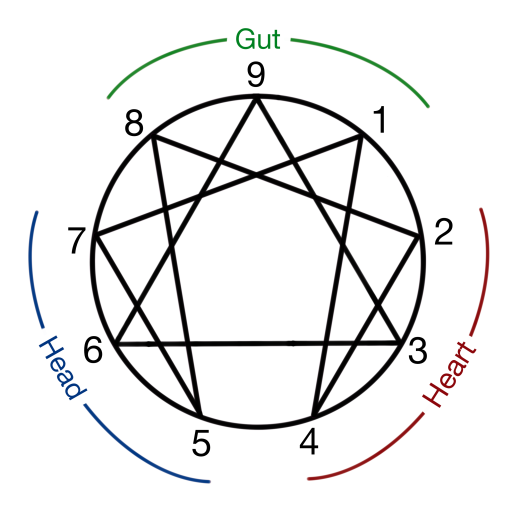
Emotionally centered individuals are empathetic, emotionally intelligent, and seek emotional satisfaction. They are inclined towards wanting, loving, obtaining, and caring. The limbic system in the midbrain is crucial for these individuals, as feelings of approval, power, and inspiration are significant to them.
Emotionally centered individuals include:
-Helper: Generous, easily moved, seeking love and affection, striving to please others
-Achiever: Determined, ambitious, self-confident, easily focused, competitive
-Individualist: Imaginative, sensitive, searching for meaning, striving to be unique
Mentally centered individuals prioritize mental activities. They are thought-oriented, logical, consistent, able to synthesize well, and objective. They primarily use their frontal lobes. Their desire to understand and know is crucial.
Mentally centered individuals include:
- Investigator: Secluded from society, valuing knowledge and comprehension, inclined towards conceptualization
- Loyalist: Cautious, prudent, seeking security, inclined towards anxiety
- Enthusiast: Outgoing, lively, seeking enjoyment in life
Physically centered individuals prioritize physical activities over mental ones. They have dominant hindbrains and are inclined towards protection, care, and completion. They prioritize physical pleasure and accomplishment over thinking and are more successful in application than in thought.
Physically centered individuals include:
- Challenger: Strong, inclined towards struggle, leadership, self-assured, results-oriented
- Peacemaker: Harmonious, accommodating, empathetic, calm, averse to conflict
- Idealist: Idealistic, disciplined, detail-oriented, critical, values responsibilities
Wing Temperament

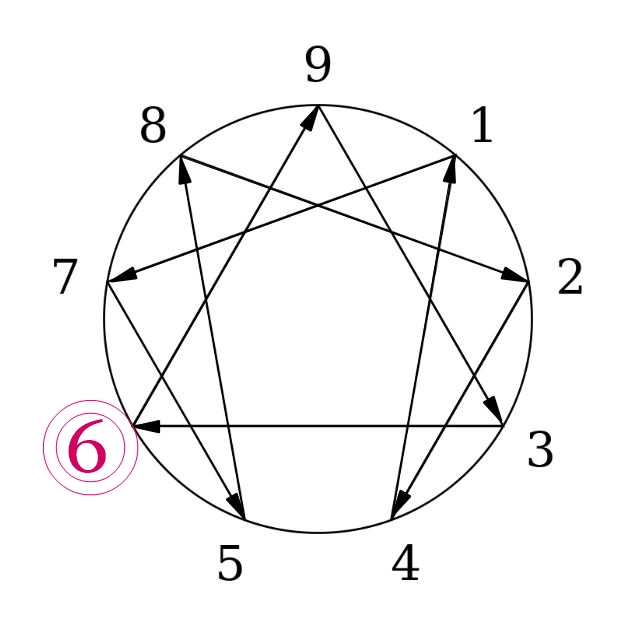
As seen in the diagram, the Enneagram is a circular structure. Each temperament takes on characteristics from its immediate neighbors. If you are a type 9 temperament, your wing temperament could be either 1 or 8. Wing temperaments affect individuals differently; some people's wing temperaments are dominant, while others' are more recessive.